Data Engineering
Master the full data engineering lifecycle—ingest, store, process, orchestrate, and monitor data—so you can build robust, scalable data pipelines that power analytics and ML.
Why Data Engineering Matters
In today’s data-driven world, businesses need reliable pipelines to move, clean, transform, and serve data. Good data engineering ensures that insights are timely, trusted, and cost-effective. With data infrastructure being central to modern applications, demand for engineers who can build and maintain it is growing rapidly.
Flexible learning: fully online and instructor-led offline sessions
Personalized learning paths based on AI-driven skill diagnostics
Hands-on labs and real-world capstone projects
Dedicated mentorship and expert code reviews
100% placement support including interview prep, role matching, and career guidance
PROGRAM OVERVIEW
Over ~ 7 months (or suitable period), learners move through core modules: Foundations, Ingestion & Storage, Processing & Transformation, Workflow Orchestration & MLOps, Monitoring & Deployment. The program combines live Instructor-led sessions, labs, real-world projects, and mentorship.
The Complete Data Engineering Training Program
Phase 1: Foundations
🎯 Goal: Build the essential base—programming, data fundamentals, and fundamentals of systems.
Module 1: Programming & Data Structures
- Python core (data types, loops, functions, modules)
- Advanced data structures (lists, dicts, sets, trees/maps)
- Basic scripting & version control (Git)
Module 2: Database Fundamentals & Data Modelling
- Relational databases: SQL querying, normalization, indexing
- NoSQL primers (key-value, document, columnar stores)
- Schema design for analytics vs transactional use-cases
Phase 2: Ingestion & Storage
🎯 Goal: Learn how to bring data in and store it efficiently.
Module 3: Data Ingestion Architectures
- Batch ingestion (Airflow, cron jobs)
- Streaming ingestion (Kafka / Pulsar basics)
- Connectors / ETL/ELT tools (Airbyte, Fivetran)
Module 4: Storage Systems & Warehousing
- Data lakes vs warehouses vs lakehouses
- Tools/platforms: S3, Azure Blob, GCS; Snowflake, BigQuery, Redshift, Databricks
- Partitioning, formats (Parquet, ORC, Avro)
Phase 3: Processing & Transformation
🎯 Goal: Transform raw data into analytics-ready and ML-ready data.
Module 5: Batch Data Processing
- Using Spark or PySpark
- Transformations, aggregations, joins, enrichments
Module 6: Streaming & Real-time Processing
- Stream processing (stateless vs stateful)
- Frameworks: Spark Streaming, Flink, Kafka Streams
Module 7: Data Transformation Tools & Best Practices
- dbt for modular, testable transformations
- Versioning, testing, docs
Phase 4: Workflow Orchestration & Deployment
🎯 Goal: Make pipelines reliable, repeatable, and production-ready.
Module 8: Orchestration & Scheduling
- Airflow, Prefect, Dagster (DAG design, triggers, retries, monitoring)
Module 9: Containerization & Infrastructure as Code
- Docker, Kubernetes basics
- Terraform, CloudFormation
Module 10: MLOps & Deployment of Data Pipelines
- Deploying pipelines; optimizing for scale
- CI/CD for data workflows
Phase 5: Monitoring, Security & Capstone
🎯 Goal: Ensure quality, reliability, security, and wrap it up with a project.
Module 11: Data Quality & Observability
- Great Expectations or similar tools
- Monitoring pipelines (latency, failures, usage)
Module 12: Security, Governance, & Compliance
- Data privacy, encryption, access control
- Data lineage, auditability
- GDPR & regulations
Module 13: Capstone Project (6–8 weeks)
- End-to-end solution: ingestion → storage → transformations → delivery
- Include monitoring, security, documentation
- Domain options: Finance, Healthcare, Retail, IoT
Module 14: Interview & Career Prep
- Common DE interview Qs (SQL, system design, data modeling)
- Resume & GitHub portfolio
- Mock interviews (technical & behavioral)
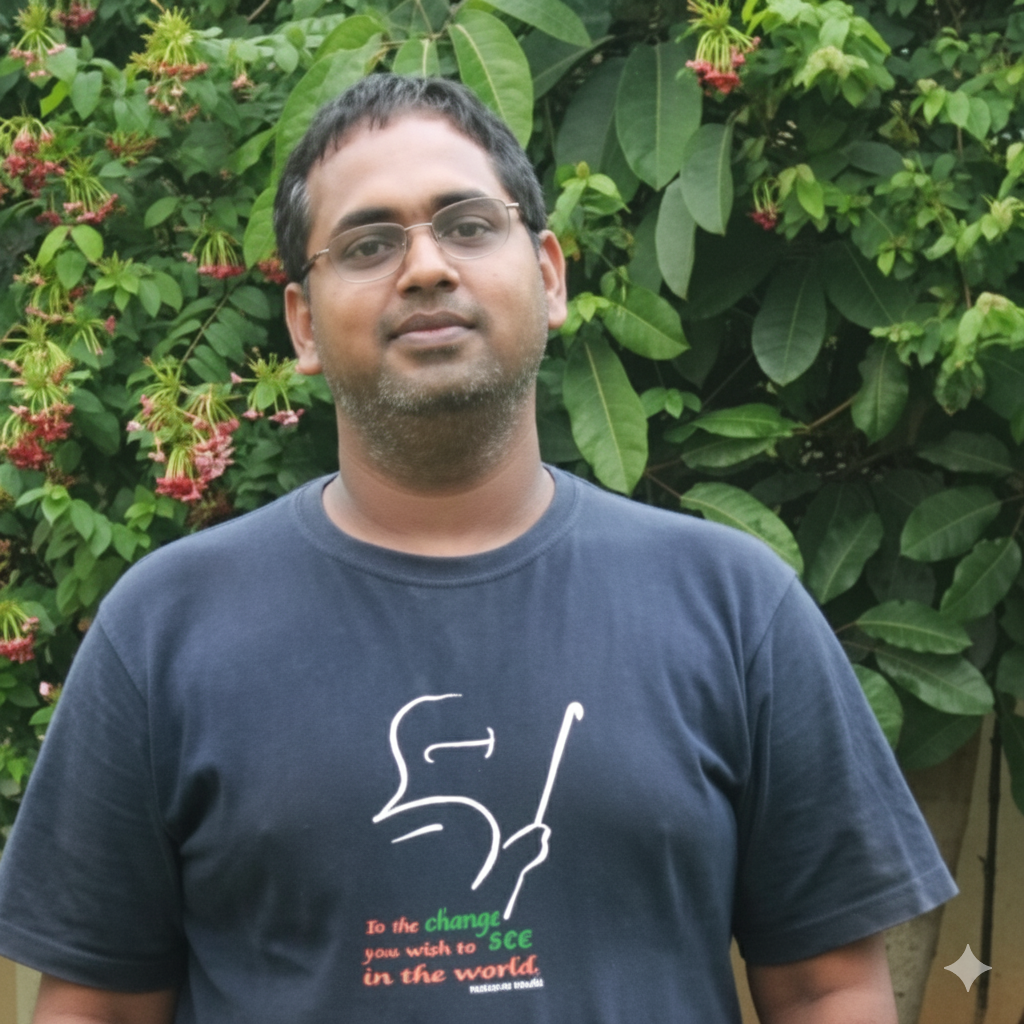
Ashutosh Dwivedi
PhD, IIT Kanpur • AI & Cybersecurity
Expert in Artificial Intelligence, Machine Learning, Computer Vision, Data Analytics and Embedded Systems. Co-author of “Digital Communication using MATLAB.”
- AI & ML
- Computer Vision
- Data Analytics
- Embedded Systems
FORMATS & SUPPORT
| Onlite Cohorts and Virtual Instructor-Led sessions |
| Flexible learning options available |
| Continuous mentor support via 1:1 sessions, code reviews, and dedicated Slack channel |
| Comprehensive 100% placement support with mock interviews and job placement assistance |
We're Here To Help!
Office
#723, 3rd Floor, NES Road, A Sector,
Yelahanka New Town, Bengaluru, 560064
Hours
Mon-Sat: 9am – 7pm
Sun: Closed